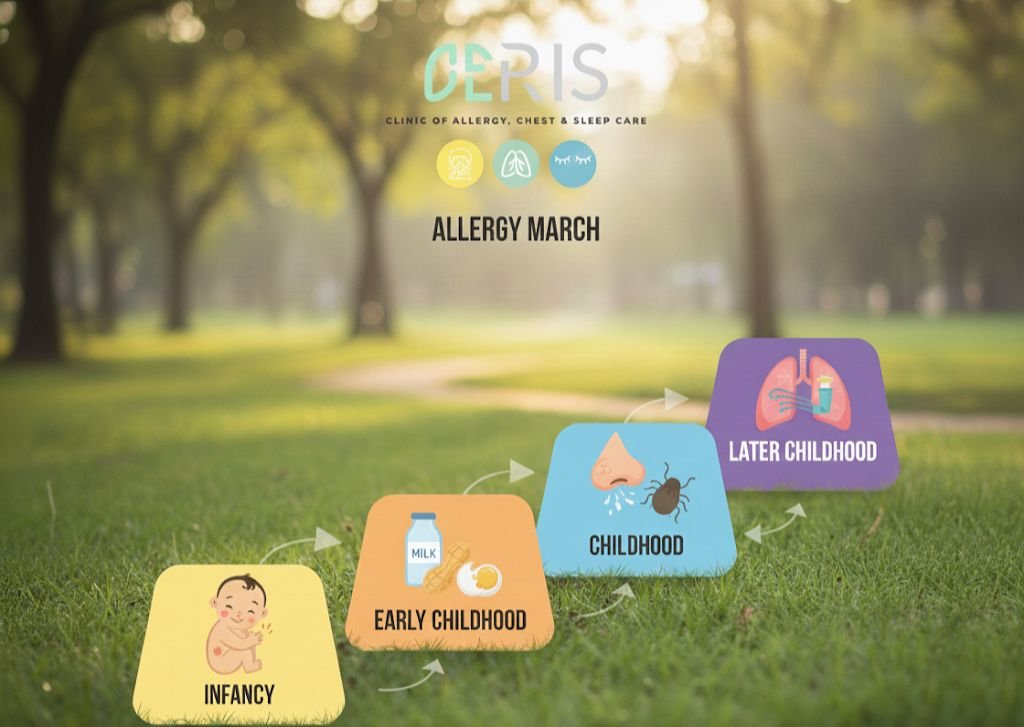
👣 The "Allergy March": How Allergies worsen Over Time
Have you ever noticed that a child with bad eczema (itchy skin) later develops allergic rhinitis or asthma?
We call this” the Allergy March “ (or Atopic March). It’s not a disease itself, but a way how allergy progresses over a period of time.
The Typical Progression:.
The march usually starts in infancy or in early childhood with:
1. Eczema (Atopic Dermatitis): Dry, itchy, red patches on the skin. The broken skin barrier may let allergens go in and train the immune system to be oversensitive.
2. Food Allergies: Developing reactions to foods like milk, eggs, or peanuts, often within the first few years of life.
Few may develop anaphylactic reaction on eating specific food like shrimps, egg etc
3. Later in childhood or in adulthood these can sometimes turn into:
1. Hay Fever (Allergic Rhinitis): Sneezing, itchy nose, and congestion due to things like pollen or dust mites.
2. Asthma: Coughing, wheezing, and shortness of breath , chest tightness.
Why It is important to know:
Understanding the Allergy March is important because it tells doctors which children are at higher risk for future allergies. By recognizing the eczema early and treating it properly, we aim to protect the skin barrier and potentially slow down or even prevent the progression to food allergies, hay fever, and asthma.
Early treatment is key to managing each step of the "march" and improving a child's quality of life.
How can we diagnose allergies early?
Allergy testing, skin prick test, patch test, drug challenge test , and sometime blood allergy testing can tell you about your allergies. However Skin prick test is the gold standard test.
Dr. Aditi Shah
Dr. Pravin Taware
Aero Clinic of allergy Chest and Sleep Care, Matunga East.